Why Businesses Need Both Digital Marketing and Custom Software Development to Scale in 2026
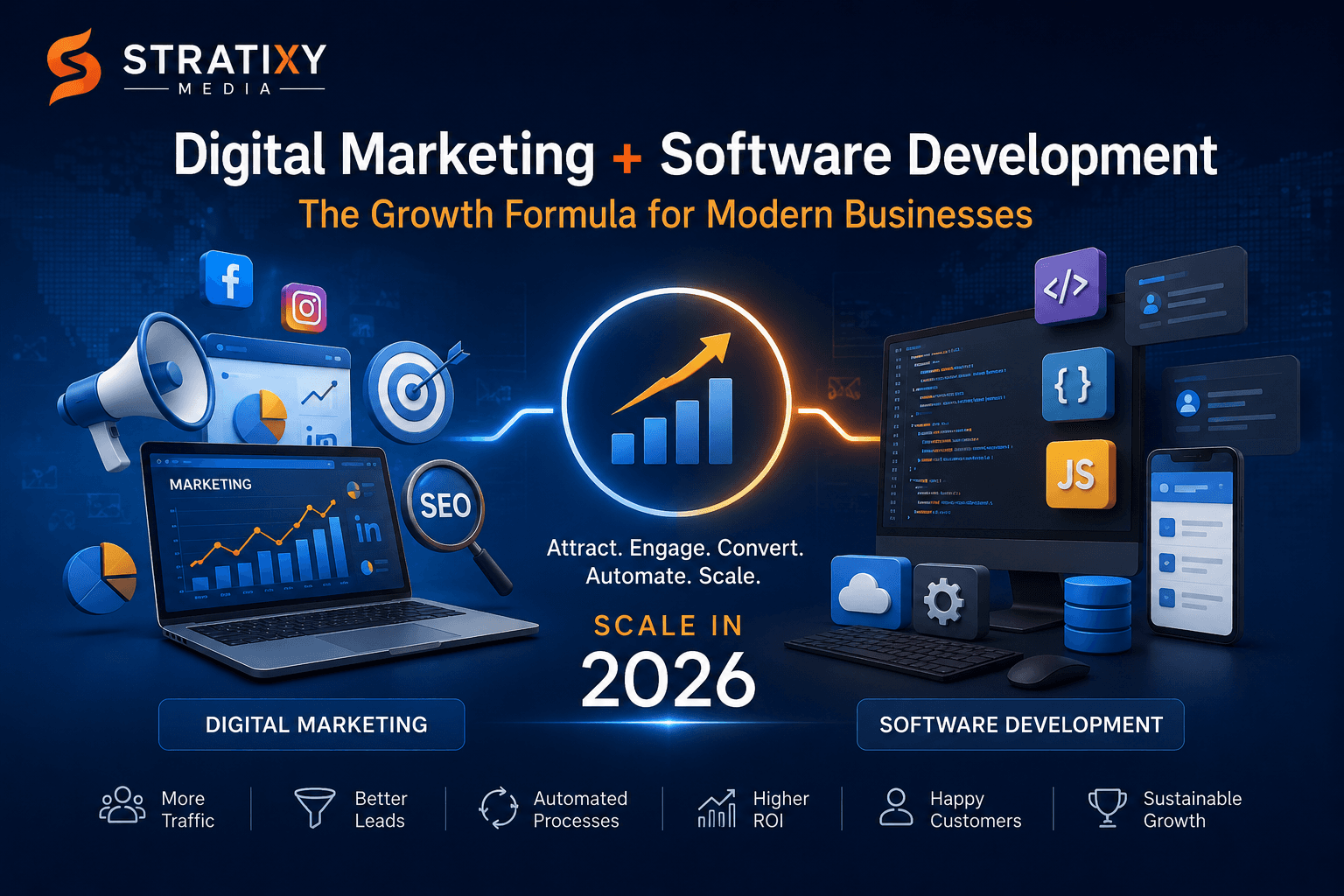
In today’s competitive digital landscape, businesses can no longer rely solely on marketing or technology to achieve sustainable growth. Companies that succeed in 2026 are those that combine effective digital marketing strategies with powerful software solutions.
While digital marketing helps attract potential customers, software development ensures that businesses can efficiently convert, serve, and retain those customers. Together, they create a growth ecosystem that drives long-term success.
The Modern Business Challenge
Many businesses invest heavily in advertising, social media campaigns, and search engine optimization but still struggle to generate meaningful results.
The reason is simple: attracting visitors is only one part of the equation.
If your website loads slowly, your lead management process is inefficient, or your customer experience is poor, even the best marketing campaign will fail to deliver maximum return on investment.
This is where software development becomes a crucial part of the growth strategy.
How Digital Marketing Drives Business Growth
Digital marketing helps businesses increase visibility, reach target audiences, and generate qualified leads.
Key benefits include:
- Improved online visibility through SEO
- Increased website traffic
- Better brand awareness
- Higher lead generation
- Enhanced customer engagement
- Measurable marketing performance
Modern digital marketing channels include:
Search Engine Optimization (SEO)
SEO helps businesses rank higher in search engines, making it easier for potential customers to find products and services online.
A strong SEO strategy focuses on:
- High-quality content
- Technical website optimization
- User experience improvements
- Mobile responsiveness
- Website performance
- Authoritative backlinks
Pay-Per-Click Advertising (PPC)
PPC campaigns provide immediate visibility and can generate targeted traffic quickly.
Businesses can reach potential customers through:
- Google Ads
- Search advertising
- Display campaigns
- Retargeting campaigns
- Shopping advertisements
Social Media Marketing
Social platforms allow businesses to build relationships with their audience while strengthening brand recognition.
Effective social media strategies include:
- Consistent content publishing
- Community engagement
- Video marketing
- Influencer collaborations
- Paid social campaigns
Why Software Development Matters Equally
Marketing generates opportunities, but software development helps businesses capitalize on them.
Custom software solutions can streamline operations, improve customer experiences, and create competitive advantages.
Enhanced User Experience
Customers expect fast, responsive, and intuitive digital experiences.
Custom software development helps businesses create:
- High-performance websites
- Web applications
- Mobile applications
- Customer portals
- E-commerce platforms
A better user experience often leads to:
- Higher conversion rates
- Increased customer satisfaction
- Reduced bounce rates
- Improved retention
Business Process Automation
Manual processes slow down growth.
Custom software can automate:
- Lead management
- Customer onboarding
- Email workflows
- Reporting systems
- Inventory management
- Customer support operations
Automation reduces operational costs while improving efficiency and accuracy.
Data-Driven Decision Making
Modern businesses generate vast amounts of data.
Custom software solutions can collect, organize, and analyze information to provide actionable insights.
Organizations can track:
- Customer behavior
- Marketing performance
- Sales trends
- Operational efficiency
- Revenue growth
These insights support smarter business decisions.
The Power of Combining Marketing and Technology
Businesses achieve the best results when marketing and technology work together.
For example:
A digital marketing campaign may generate thousands of visitors every month.
However, if the website lacks proper lead capture systems, CRM integration, marketing automation, and performance optimization, many opportunities will be lost.
When custom software supports marketing initiatives, businesses can:
- Convert more visitors into customers
- Improve lead nurturing
- Deliver personalized experiences
- Increase customer retention
- Maximize marketing ROI
Signs Your Business Needs Both Services
Your business may benefit from integrated marketing and software solutions if:
- Website traffic is growing but conversions remain low.
- Lead management is largely manual.
- Customer experience issues affect sales.
- Business processes consume excessive time.
- Marketing data is scattered across multiple platforms.
- Existing systems cannot scale with business growth.
Future Trends Shaping Business Growth in 2026
Several trends are transforming how businesses operate:
Artificial Intelligence Integration
AI is enhancing customer support, content creation, personalization, and business automation.
Marketing Automation
Businesses increasingly rely on automated workflows to improve efficiency and customer engagement.
Personalized Customer Experiences
Consumers expect tailored recommendations and experiences across digital channels.
Data-Centric Strategies
Organizations that leverage data effectively gain a significant competitive advantage.
Choosing the Right Technology and Marketing Partner
A successful growth strategy requires expertise in both digital marketing and software development.
When selecting a partner, businesses should look for:
- Proven industry experience
- Technical expertise
- Transparent communication
- Strategic thinking
- Scalable solutions
- Long-term support
The right partner understands that technology and marketing are not separate functions—they are interconnected drivers of business success.
Conclusion
In 2026, businesses that combine digital marketing with custom software development will be better positioned to compete, innovate, and grow.
Digital marketing attracts customers. Software development creates exceptional experiences and efficient operations. Together, they form a powerful foundation for sustainable growth.
Organizations that invest in both areas can improve customer acquisition, increase operational efficiency, and achieve stronger long-term results in an increasingly digital world.